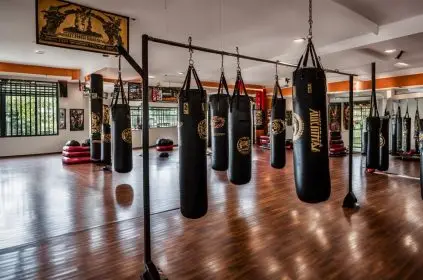

Revised for 2026: The Sport of Kickboxing. Embark on an exciting journey into kickboxing. It’s a combat sport that combines boxing punches with martial arts kicks. It became very popular during the 70s and 80s, especially in the U.S. and Europe. The sport has ancient roots, blending many cultural influences with its evolution.
Engage in kickboxing training and enjoy a full-body workout. It boosts your strength and stamina, while also boosting your self-esteem. This sport has different styles like full-contact, semi-contact, and Muay Thai. Its more recent form began to take shape in the mid-20th century. Kickboxing took off in the 60s and 70s before hitting North America in the early 1970s as full-contact Karate.
Today, kickboxing is still popular worldwide. Millions participate in kickboxing training and fitness sessions, underscoring its broad appeal. The International Kickboxing Federation (IKF) has been in charge since 1992, with support from the World Kickboxing Association (WKA) and the World Kickboxing Network (WKN).
Whether you love the excitement of kickboxing competitions, want to master its techniques, or simply enjoy the fitness it provides, this sport is for you. It’s a journey full of challenges and inspiration. Are you ready to discover what kickboxing can do for you?
Key Takeaways
- Kickboxing is a dynamic combat sport that combines boxing techniques with martial arts kicks
- Kickboxing offers an intense full-body workout that builds strength, endurance, and self-confidence
- Different styles of kickboxing emerged, including full-contact, semi-contact, and Muay Thai rules
- Kickboxing gained popularity in the 1970s and 1980s, particularly in the United States and Europe
- Millions of people worldwide participate in kickboxing training and fitness programs
Introduction to the Exciting World of Kickboxing
Kickboxing is a thrilling sport. It mixes cardio, strength training, and agility for a great full-body workout. When you do kickboxing, you not only burn calories and boost your metabolism. You also improve your overall fitness and well-being.
In a single hour-long kickboxing class, students may lose 3-4 lbs of water through sweating. This shows just how effective kickboxing is at burning calories and working all the body’s muscles.
The sessions typically start with a warm-up. It includes three 3-minute rounds of skipping and quick sets of pushups, situps, and squats. This warm-up prepares your body for the tough workout ahead by increasing your heart rate and loosening your muscles.
Next, you move into shadowboxing, spending one or two 3-minute rounds. You’ll perform basic boxing moves such as the jab and cross. These drills are effective for learning proper form, coordination, and striking technique.
If you’re up for a challenge, there are advanced partner sessions. Here, you’ll do boxing combos followed by knee hits. These partner exercises effectively target your core and lower-body muscles, taking your skills up a notch.
Kickboxing is more than just physical exercise. It’s also a powerful tool for stress relief. With every move, you release stress and channel your energy into something positive. The mental focus and discipline of kickboxing clear your mind and boosts your spirit. It makes you feel confident and powerful.
At the end of class, there’s usually a freestyle round. Here, you get to show off all the moves and combos you’ve learned. It’s a great chance to see how far you’ve come.
The final part is a fitness segment with various exercises. This includes planks, pushups, sit-ups, and more. These moves help increase your strength, endurance, and core stability. They wrap up the workout nicely, targeting all parts of your fitness.
Kickboxing is more than a workout. It’s a journey that changes you physically, mentally, and emotionally. If you want to lose weight, build strength, or enjoy staying fit, kickboxing is an excellent choice. It leaves you feeling energized and proud of what you can achieve.
The Origins and Evolution of Kickboxing
Kickboxing has deep roots in Asia’s ancient martial arts. Over the years, cultures and fighting styles worldwide have shaped this sport. The journey from early forms in China to its international recognition is a fascinating story of human innovation and achievement.
Ancient Roots in Asian Martial Arts
Kickboxing started from ancient Chinese martial arts. It’s closely tied to Kung Fu and Shaolinquan, both of which emphasize punches and kicks. These practices focused on building strength, agility, and discipline, which are still key in kickboxing today.
Muay Thai, a Thai martial art, was introduced to Japan and brought powerful kicks and punches. This fusion of Japanese karate gave rise to kickboxing. By combining different elements, a new, dynamic fighting style emerged.
The Birth of Modern Kickboxing
In the 1960s, Japan introduced “Kickboxing Karate” by combining Muay Thai and karate techniques. This style quickly won over martial artists seeking a dynamic, full-contact sport. The sport’s popularity quickly spread worldwide.
The first professional kickboxing match took place in Los Angeles in 1974, marking a major step forward for the sport. As it continued to grow, governing bodies such as the World Kickboxing Association were established. They standardized rules and spread kickboxing globally.
The Spread and Popularity of Kickboxing Worldwide
The 1980s saw kickboxing’s popularity soar, especially in Asia. Japan, Thailand, and other regions experienced rapid growth driven by local fighters and rising interest in martial arts. Events attracted big crowds and media attention, making kickboxing a major sport.
Muay Thai’s influence globally increased, with Thai fighters excelling in kickboxing competitions. This success helped raise awareness and interest in the sport. It also brought practitioners from various martial arts backgrounds into kickboxing.
Kickboxing has since evolved worldwide, with distinct styles emerging in different regions. Today, millions enjoy this sport’s physical challenges and mental rewards. It unites people worldwide through a shared love of competition and self-improvement.
The journey of kickboxing, from its ancient beginnings to today, reflects a deep human affinity for self-growth. The sport remains a thrilling opportunity for kickboxing enthusiasts to test themselves and build a community with a shared passion.
The Sport of Kickboxing
Kickboxing originated in Japan in the 1960s. It evolved from a blend of karate and Muay Thai. Today, it’s a popular sport worldwide. Kickboxing blends moves from different fighting styles, making it dynamic.
Kickboxing as a Competitive Sport
The first big kickboxing fight was in Los Angeles in 1974. In the same year, the sport took off with the inaugural World Championships. Now, it’s a major sport with a large fan base. Various organizations, such as the IKF and WKA, set the rules for matches.
These groups have helped kickboxing grow. The sport was even in the 2017 World Games and will be in 2022. Kickboxing’s popularity has also boosted MMA since the 1990s.
Rules and Regulations of Kickboxing Competitions
In a kickboxing fight, the goal is to score points or get a knockout with punches and kicks. Hits to the head and body earn points. If a fighter can’t keep going, the referee steps in.
But each organization has its own rules. Some allow knees and elbows, like in Muay Thai. Others don’t. Here’s a quick look at the rules for different types of kickboxing:
| Style | Punches | Kicks | Knees | Elbows | Clinching |
|---|---|---|---|---|---|
| American Kickboxing | Yes | Yes | No | No | No |
| Japanese Kickboxing | Yes | Yes | Yes | No | Limited |
| Muay Thai | Yes | Yes | Yes | Yes | Yes |
| Savate | Yes | Yes | No | No | No |
In all styles, athletes must be properly trained and wear the appropriate gear. Kickboxing remains an intense test for fighters. And it’s always thrilling for the audience.
Kickboxing Styles and Techniques
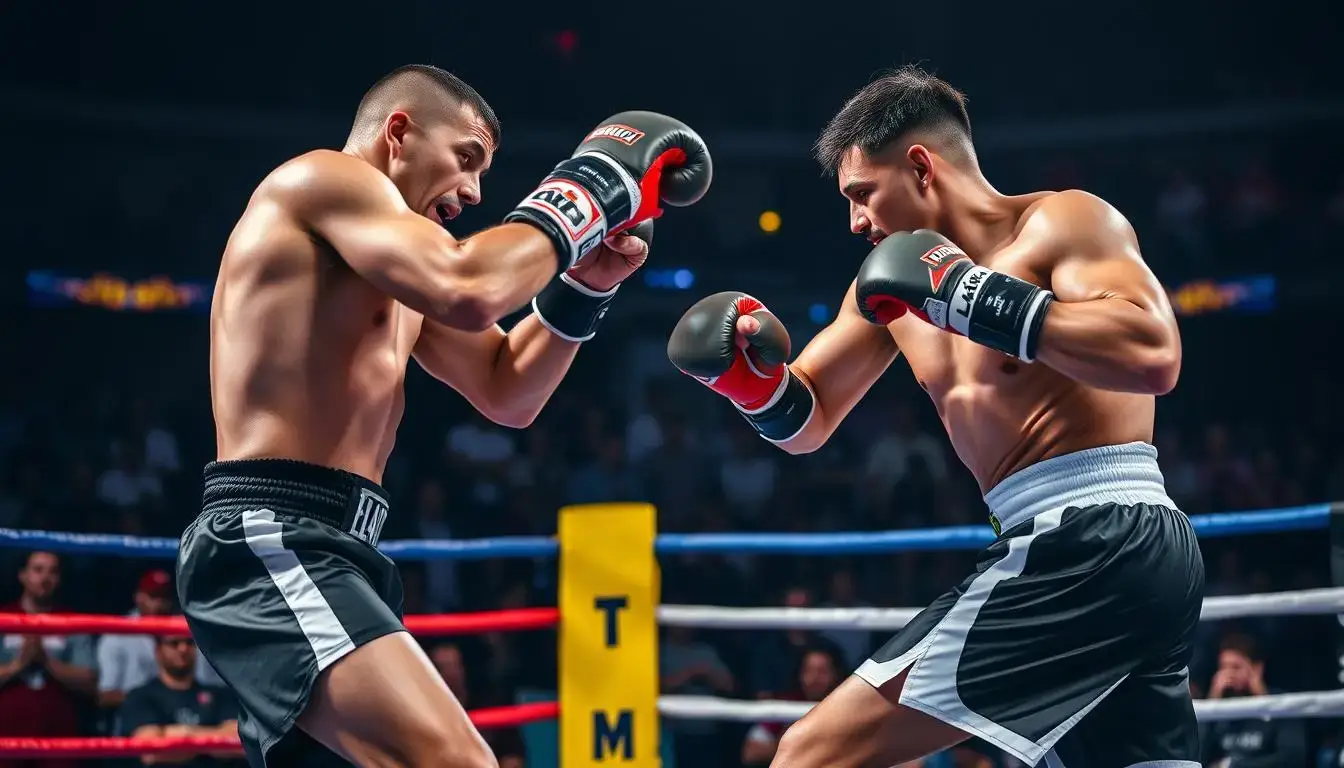
Kickboxing emerged as its own sport between the 1950s and 1970s. It evolved from combining Muay Thai, karate, and boxing techniques. It has many styles and rules. In September 1974, the first World Championships for kickboxing were held.
Now, kickboxing is famous worldwide. Groups like the World Association of Kickboxing Organizations (WAKO) and the World Kickboxing Association help it grow. There’s no one world championship. But events like Glory and ONE Championship give out their own titles.
Let’s check out some popular kickboxing styles and what makes them unique:
Full-Contact Kickboxing
This type of kickboxing places a strong emphasis on powerful strikes. It’s about using your fists and feet strongly. The goal is to knock out or overpower your opponent. Matches are full of energy, showing off the fighters’ power and skill.
Semi-Contact Kickboxing
This kickboxing cares more about how you hit than hitting hard. It’s lighter on contact and stresses precision and quickness. Judges give points for well-executed techniques to pick a winner.
Muay Thai Kickboxing
Muay Thai is a Thai martial art known as “the art of eight limbs.” It’s known for its use of punches, kicks, elbows, and knees. It also focuses on close combat and clinching, which makes it unique from other styles.
Kickboxing has grown to include many different styles from around the world. There are Japanese, Dutch, French, and Filipino styles, among others.
| Kickboxing Style | Key Features |
|---|---|
| Full-Contact Kickboxing | Powerful strikes, emphasis on knockouts |
| Semi-Contact Kickboxing | Technique and control, point-based scoring |
| Muay Thai Kickboxing | Use of elbows and knees, clinching techniques |
Kickboxing training focuses on striking and defense. Fighters get good at punches, kicks, and blocks. They also excel at moving quickly and efficiently. These skills help them in various situations.
Since the 1990s, kickboxing has helped drive the rise of mixed martial arts (MMA). Many MMA fighters use kickboxing techniques. It shows how effective kickboxing is in many ways.
The Physical Benefits of Kickboxing Training
Kickboxing is more than punching and kicking. It offers many ways to improve your health and get more fit. You move a lot and use almost all your muscles. Each kickboxing session helps burn a lot of calories. For example, someone weighing 155 pounds can burn 372 calories in just 30 minutes. If you do it often, you’ll get stronger, have more stamina, and become more flexible.
Full-Body Workout and Calorie Burning
Kickboxing is perfect if you want a tough workout. It combines cardio, strength, and a variety of exercises. You perform activities like sit-ups and push-ups that engage your whole body. People who do kickboxing, whether they’re pros or just starting out, usually have more muscle and less body fat. This shows how effective kickboxing can be.
Improving Strength, Endurance, and Flexibility
Kickboxing builds strength and helps you exercise longer. A study of young men found that after five weeks of kickboxing three times a week, they became stronger. Their power also went up by 7%. They were faster in short races. Kickboxing is good for your heart, too. It strengthens the heart and reduces the risk of heart disease. Another 2014 study found that kickboxing three times a week for an hour increased the amount of oxygen your body can use. This is a sign of better heart health.
Kickboxing is also great for making you bendier. This can help prevent injury. A study found that people with multiple sclerosis improved their balance and mobility after five weeks of kickboxing three times a week. And, if you’re between 50 and 85, doing kickboxing for three months can make your muscles and bones stronger.
| Physical Benefit | Description |
|---|---|
| Full-Body Workout | Engages multiple muscle groups and burns significant calories |
| Strength | Builds muscular endurance through powerful strikes and kicks |
| Endurance | Enhances cardiovascular endurance and reduces heart disease risk |
| Flexibility | Improves flexibility through dynamic movements and stretching |
Although kickboxing has many benefits, it can also lead to injuries. Approximately 65% of injuries people sustain from kickboxing are new. Nearly 59% of these injuries make it difficult for people to perform their usual activities. Muscle strains and sprains are common types of injuries. Before you start kickboxing, talk to a doctor. They can check if it’s safe for you. Start slowly and think about what you want to achieve with kickboxing. Try to do it at least three times a week for an hour each time.
Mental and Emotional Benefits of Kickboxing
In addition to strengthening you, kickboxing can boost your mood and mindset. It’s an effective way to manage stress. You can punch and kick in a safe space, which helps you release built-up stress and feel better.
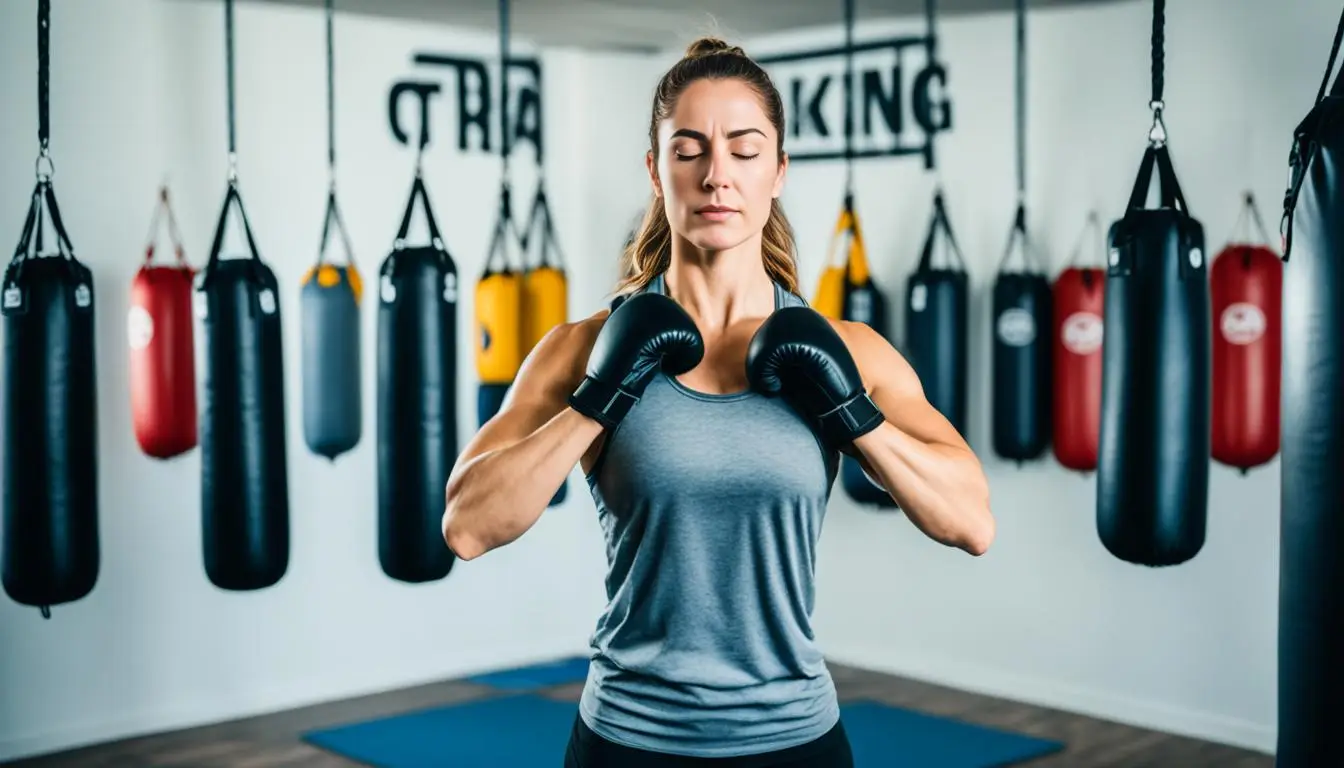
Kickboxing helps you stay focused and stay on track with your goals. This sharpens your mind. With each move you learn, your confidence grows. You feel like you can take on anything.
It’s not just about throwing punches, though. You also learn to balance better. Studies show this helps keep your brain working well. Your memory and cognitive skills improve thanks to kickboxing. This can help you feel more confident and focused.
Kickboxing also triggers the release of endorphins. These are the happy hormones. So, it’s not just your mind that benefits; kickboxing can make you feel happier, too. Plus, it’s been linked to easing feelings of sadness, worry, and even ADHD.
Kickboxing is about more than just exercise. It’s a path to growing as a person and getting better at the sport.
Adding kickboxing to your daily or weekly routine can change how you feel. The mental and emotional perks of kickboxing are a big deal. They can help your whole self – body and mind – feel good.
Essential Kickboxing Equipment for Beginners
Starting kickboxing requires the right gear for safety and optimal performance. The most common injuries are to the wrist and hand. This happens when people don’t use the right gear. Having the best equipment can make your training better and keep you safe.
It’s key to choose carefully when looking for kickboxing gear. You should find a trusted place that sells good-quality gear. Brands such as Adidas, Everlast, and Fairtex are well known for producing durable, high-performing products.
Gloves, Hand Wraps, and Shin Guards
Boxing gloves come in a few types for different uses. For someone just starting, a good pair is a must-have. Important items for kickboxing newbies are gloves, wraps, a water bottle, and a gym bag. Here are some glove suggestions:
- Adidas Hybrid 80 Training Gloves
- Adidas Hybrid 200 Training Gloves
- Everlast Powerlock2 Pro Training Gloves
For hand and wrist safety in training, hand wraps are essential. You can choose from a few types, like Tape and Gauze or Traditional Hand Wraps. Some recommended wraps for beginners include the Everlast 1910 Hand Wraps and the Everlast Flexcool Hand Wraps.
Don’t forget about shin guards to protect your legs from kicks. There’s also headgear, mouthguards, and cups for men.
Kickboxing Bags and Pads
Improving your kickboxing requires practice with bags and pads. This helps with power, aim, and form. There are different types of bags, including hanging, banana-punching, and free-standing bags.
| Equipment | Purpose | Recommendations |
|---|---|---|
| Boxing Gloves | Protect hands and wrists during striking | Adidas Hybrid 80, Adidas Hybrid 200, Everlast Powerlock2 Pro |
| Hand Wraps | Provide support and stability to the hands and wrists | Everlast 1910, Everlast Flexcool |
| Shin Guards | Shield shins from impact during kicks | Fairtex SP5, Venum Kontact |
| Punching Bags | Practice techniques and develop power | Hanging Punching Bags, Free-Standing Punching Bags |
Choosing the right gear is important for kickboxing beginners. Good equipment makes training safe and effective. With the right gear, you can dive into kickboxing with confidence and reach your goals.
Getting Started with Kickboxing Training
If you’re keen to start kickboxing, the first step is picking the right place to train. Find a gym or class that fits your skill level and goals well. Choose a place with experienced instructors who create a supportive, safe environment. You can easily find beginner-friendly classes that start with the basics and help you improve slowly. This way, you’ll feel more confident as you go.
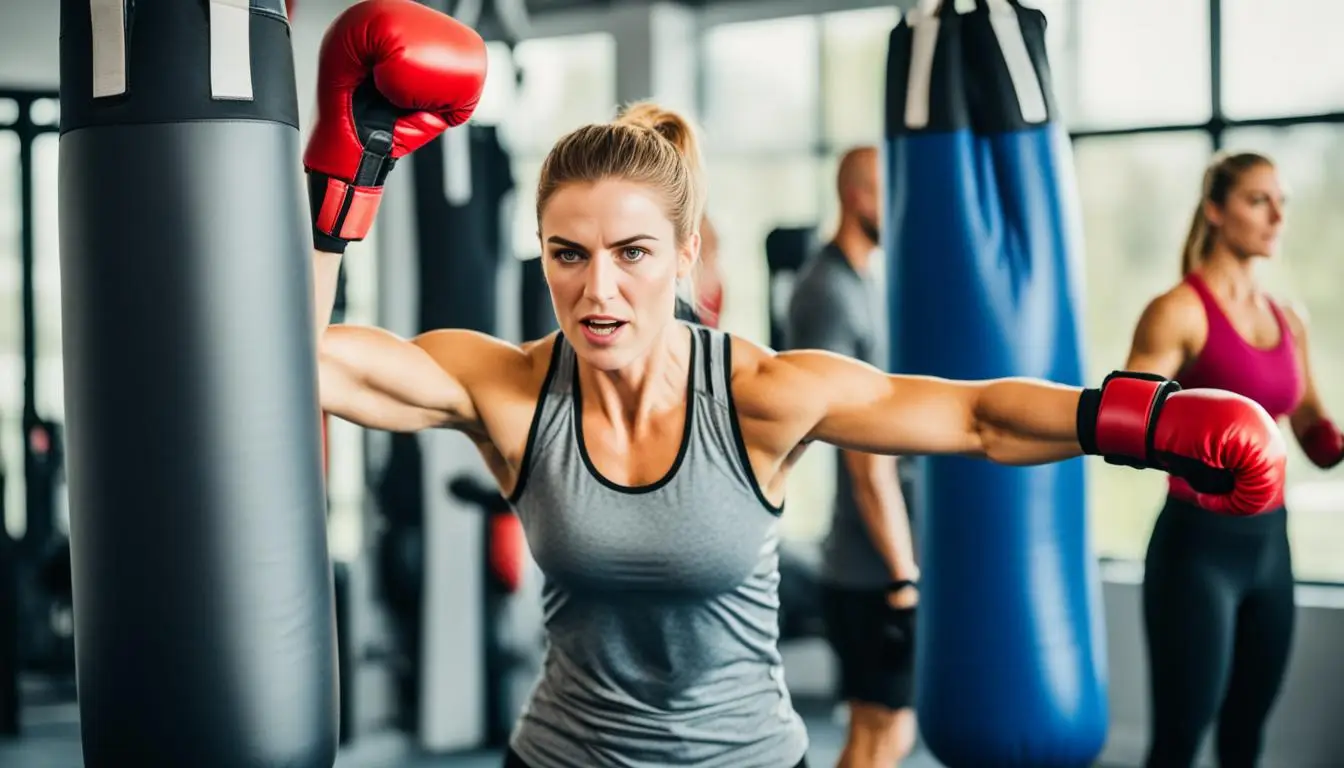
Start by learning the basic moves like jabs, crosses, and kicks. These basic skills are vital for kickboxing. Beginner sessions will include cardio, strength-building, and technique practice. This mix helps you get fit while mastering the moves.
Finding the Right Kickboxing Gym or Class
To make your kickboxing journey great, look for certain things in a gym or class:
- Instructor qualifications and experience
- Class size and student-to-instructor ratio
- Facility cleanliness and equipment quality
- Convenient location and class schedule
- Welcoming and supportive community
Beginner-Friendly Kickboxing Workouts
Start your kickboxing journey with classes that teach you the basics with care. You’ll learn correct form, technique, and how to stay safe. These classes will cover:
- Warm-up exercises to get ready for action
- Basic strikes and kicks, sharing the practice with a partner or a bag
- Footwork drills to boost your quick moves and coordination
- Conditioning to make you strong and improve endurance
- Stretches at the end to flex and prevent injuries
By continuing with your kickboxing, you will get in better shape overall. Your heart, muscles, and mental game will all get stronger. It will also boost your self-esteem and skills, including balance, flexibility, and quick thinking. Always take care of yourself by eating right, staying hydrated, and resting enough.
| Essential Kickboxing Gear | Purpose |
|---|---|
| Boxing gloves | Protect hands and wrists during striking |
| Hand wraps | Give your hands and wrists extra support |
| Shin guards | Protect your shins when you kick |
| Kickboxing shorts and tee | Help you move freely during practice |
With the right gear and dedication, you’re well on your way to becoming a kickboxing pro. The sport offers many benefits for both your body and your mind.
Kickboxing for Fitness and Weight Loss
Kickboxing is a great way to get fit and lose weight. It mixes cardio and strength exercises. This makes it perfect for burning fat and improving your health. In just 30 minutes, someone weighing 155 pounds can burn 372 calories.
It’s fast, keeping your heart rate up and improving your heart’s health. Doing it three times a week for an hour also boosts your breathing power. This is important for staying fit.
You also build muscles while losing weight with kickboxing. It helps you get lean and burn calories even after you’re done. Both experts and beginners see better muscle growth and less fat from kickboxing.
Kickboxing isn’t just good for your body. It helps your mind too, making you more confident. Learning and doing well in kickboxing brings a sense of achievement. This boosts your mood.
Try to do kickboxing at least 3 times a week, each for an hour. But start slowly, especially if you’re new. It’s also smart to talk to your doctor first, especially if you’re dealing with any health issues.
Proper techniques are key to avoiding injuries in kickboxing. Gear like gloves, wraps, and shin guards is essential. Learning from a good teacher is a must.
Get ready to change your body and mind with kickboxing. Stay committed, and you’ll become healthier, fitter, and more self-assured. Check out the benefits of kickboxing and start your exciting fitness journey today!
Kickboxing Champions and Inspirational Fighters
Over the years, kickboxing has seen many champions and inspiring fighters. They showcased amazing skills and a strong spirit. Their dedication and sportsmanship inspire people everywhere.

Notable Kickboxing Champions throughout History
Ernesto Hoost stands out with four K-1 World titles. He won 99 fights in kickboxing. Semmy Schilt won the K-1 three times. He has a great record in both kickboxing and MMA. Peter Aerts, known for his powerful kicks, has 106 kickboxing wins.
Lucia Rijker is a pioneer in female kickboxing. She has nearly unbeatable records in both boxing and kickboxing. Jorina Baars has never lost in Muay Thai with 46 wins and 3 draws.
Inspiring Stories of Kickboxing Athletes
Many kickboxers have stories of perseverance. Buakaw Banchamek went from tough times to a national hero in Thailand.
Giorgio Petrosyan is known for precise fighting. He has 101 wins in kickboxing. Badr Hari wows fans with his explosive style and has 106 wins.
| Fighter | Kickboxing Record | Notable Achievements |
|---|---|---|
| Rico Verhoeven | N/A | Considered the number one heavyweight kickboxer in the world, multiple-time Kickboxer of the Year |
| Robin van Roosmalen | 51 wins, 17 losses, 3 draws | Multiple championship titles |
| Sittichai Sitsongpeenong | N/A | Thai Glory Lightweight Champion, considered one of the top lightweight fighters in the world |
| Ramon Dekkers | N/A | Eight-time Muay Thai world champion, known for his aggressive fighting style |
These fighters excel in the ring and as role models. They represent kickboxing’s best values and inspire new generations of fighters. Their legacy drives the sport forward, showing the power of dedication and resilience.
Kickboxing as a Self-Defense Skill
Kickboxing is more than just an intense workout. It strengthens your heart and lungs and helps you burn calories. It also teaches you how to protect yourself. Even a little bit of martial arts, like cardio kickboxing, can improve your self-defense skills.
Cardio kickboxing might not teach the most realistic self-defense tactics. But it’s a good start. It introduces the concept of self-protection, which is important. Doing any kind of martial arts, even something lighter like cardio kickboxing, helps you improve. It’s a step in the right direction.
Joining a cardio kickboxing class makes you think about self-defense. It helps you avoid being an easy target. You’ll learn strong strikes, kicks, and how to defend yourself. These skills can be very important in unexpected situations. They boost your confidence to stay safe when you need to.
The focus and awareness gained in kickboxing are useful in real life. They make you stronger both physically and mentally. It’s important to find what martial art fits you best. Starting with something lighter, such as cardio kickboxing, can lead to more advanced programs.
Training in self-defense, even with cardio kickboxing, is better than doing nothing. Cardio kickboxing is for everyone, including a 70-year-old. It shows how inclusive and effective it can be.
Kickboxing doesn’t just make you fit. It also teaches you self-defense skills you might need one day. By adding kickboxing moves to your safety toolkit, you gain the power and confidence to defend yourself as necessary.
The Future of Kickboxing: Trends and Developments
Kickboxing is booming in the fitness world, attracting more people than ever. It’s not just a trend; it’s a movement. By 2024, the kickboxing and interactive fitness sector is set to grow by a whopping US$5.44 billion. The reason for this growth? Simple really. People want fun, effective ways to work out, regardless of their fitness level or interests.
The Growing Popularity of Kickboxing Fitness Classes
Kickboxing fitness classes are on the rise. They’re not your typical sparring sessions. They allow 3.6 million Americans and others to enjoy kickboxing without the intensity of full-contact fighting. This number is expected to keep growing, making kickboxing classes a mainstay in the fitness scene.
These classes combine kickboxing moves with cardio and strength exercises. Brands like Les Mills BODYCOMBAT keep it fresh by launching new routines every few months. This keeps participants interested while accommodating fitness enthusiasts of all levels.
Innovations in Kickboxing Training and Equipment
Kickboxing is getting more advanced thanks to new training methods and gear. The market for mixed martial arts equipment is expected to grow by US$348.4 million from 2020 to 2024. This surge in demand shows that people are serious about their gear.
A program called LES MILLS CONQUER is changing the game. It’s a Les Mills boxing program in the testing phase at select sites. The goal is to offer a next-level kickboxing experience. It uses the latest training gear and techniques.
| Trend | Impact |
|---|---|
| Kickboxing Fitness Classes | Increased accessibility and popularity among a wider audience |
| Innovations in Training and Equipment | Enhanced performance, safety, and training efficiency |
| On-Demand Fitness Streaming | Flexibility and convenience for kickboxing enthusiasts |
| Group Training | Social interaction and motivation for kickboxing participants |
Another big change is the move to on-demand fitness classes. This means kickboxing enthusiasts can train at home via online platforms. This, combined with the popularity of group sessions, underscores the importance of community and motivation in kickboxing. The American College of Sports Medicine also supports this view.
With these exciting trends, kickboxing’s future looks bright. It’s not just about getting fit; it’s a thrilling journey. So, whether you’re into group kickboxing or prefer to train at home, there’s never been a better time to dive into kickboxing’s world of challenges and rewards.
The Sport of Kickboxing Conclusion
Kickboxing is not just a sport; it’s a global phenomenon. It started in Japan in the 1960s, growing in the US and Europe during the 70s and 80s. With organizations such as the World Kickboxing Association, it became popular worldwide. Millions now enjoy kickboxing for its fitness and as a sport.
Starting a kickboxing journey offers many benefits. It strengthens you, improves your fitness, and relieves stress. For those serious about kickboxing, studies show what top kickboxers look like physically. This knowledge helps everyone train, no matter their goal.
Joining the kickboxing community means being part of a supportive and empowering community. It offers significant benefits for the body and mind. If you stick with it, you develop skills that not only help in the ring but also outside. Kickboxing can change your life for the better in many ways.
The Sport of KickBoxing FAQ
What is kickboxing?
What are the benefits of kickboxing training?
Is kickboxing suitable for beginners?
What equipment do I need for kickboxing?
Can kickboxing help with weight loss?
What are the different styles of kickboxing?
How often should I train in kickboxing?
Is kickboxing effective for self-defense?
Can I compete in kickboxing?
What should I look for in a kickboxing gym?
Links
- https://vortexmartialarts.co.uk/what-is-kickboxing/
- https://medium.com/@Chabby1988/introduction-to-kickboxing-muay-thai-boxing-fa7e88b5e98c
- https://www.centurykickboxing.com/blogs/century-kickboxing-blog/brief-history-of-kickboxing
- https://en.wikipedia.org/wiki/Kickboxing
- https://eaglekickboxing.co.uk/blog/twelve-benefits-kickboxing/
- https://www.healthline.com/health/kickboxing-benefits
- https://www.verywellfit.com/mental-health-benefits-kickboxing-5216163
- https://atlfightshop.com/blogs/news/essential-kickboxing-gear-for-beginners
- https://blog.joinfightcamp.com/training/the-ultimate-guide-to-kickboxing/
- https://www.hayabusafight.com/blogs/community/guide-to-kickboxing-for-beginners
- https://www.superprof.com/blog/biggest-names-kickboxing/
- https://www.senseiando.com/is-cardio-kickboxing-a-waste-of-time-for-self-defense/
- https://www.lesmills.com/us/fit-planet/fitness/martial-arts-trends/
- https://www.ncbi.nlm.nih.gov/pmc/articles/PMC5424459/
fitness and kickboxing kickboxing benefits Kickboxing techniques Kickboxing training kickboxing workouts
Last modified: February 10, 2026