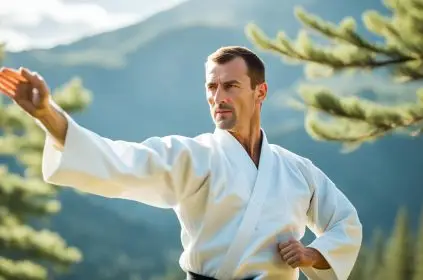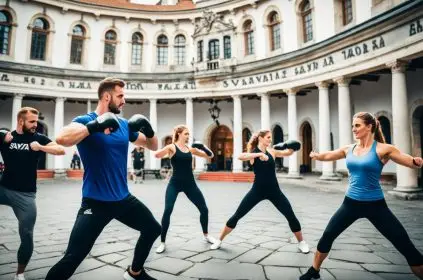
Combat Sports: Techniques, Training, and Traditions: Martial arts have been around for centuries, changing into many styles and ideas1. Combat sports such as boxing and wrestling were contested in the ancient Olympic Games as early as 648 BCE. Traditional martial arts emphasize culture, discipline, and self-improvement. Modern martial arts are more about learning self-defense skills and being flexible. This article examines combat sports, from striking to grappling, covering training, history, and modern competition.
- Combat sports have a long history dating back to antiquity, including the ancient Olympic Games.
- Traditional martial arts focus on culture, discipline, and self-improvement. Modern combat sports are more about practical self-defense and being adaptable.
- Combat sports encompass a wide range of disciplines, from striking and grappling to weapon use.
- Training can vary, from easy drills to intense sparring and competitions.
- Combat sports, particularly mixed martial arts, have become increasingly popular in recent years.
Traditional vs Modern Martial Arts
Combat sports blend the old and new in martial arts, creating a rich mix. Traditional arts such as Karate and Kung Fu have histories dating back hundreds to thousands of years. These styles teach students through a structured set of techniques and forms, with a belt system for rank advancement.
Historical Roots and Philosophy
Traditional martial arts derive from deep cultural and historical roots, emphasizing the mind, respect, and ethics. They have strong philosophical roots that shape how practitioners train and think. Today, people assume fighters know some skills, unlike before, when attackers were seen as untrained.
Structured Curriculum and Cultural Practices
Traditional martial arts have a set of practices and cultural elements, such as bowing and uniforms. These help students learn discipline and respect, and understand the art’s history. Modern gyms, however, prioritize fitness and self-defense.
Techniques and Training
Training in traditional arts includes various techniques aimed at building strength and balance. Modern arts such as Krav Maga focus on self-defense in real-world situations, employing a flexible approach.
Sparring is key in modern training, helping students practice under pressure. Traditional arts also hold competitions but place greater emphasis on culture, history, and character.
Both types of martial arts improve fitness, confidence, and discipline. They offer different philosophies and training, catering to various interests and backgrounds.
“Martial arts have the power to transform lives, not just through physical skill, but by instilling values of discipline, respect, and personal growth.”
| Traditional Martial Arts | Modern Martial Arts |
|---|---|
|
|
Traditional and modern martial arts have shaped combat sports, each with unique benefits for different people. As martial arts evolve, the interplay of tradition and modernity will continue to enrich this field.
Mixed Martial Arts
Modern martial arts such as Krav Maga, Brazilian Jiu-Jitsu (BJJ), and Mixed Martial Arts (MMA) emphasize real-world self-defense. They combine techniques from various styles to make a full fighting system.
Practicality and Adaptability
Modern martial arts have flexible and dynamic curriculums. They focus on evaluating techniques and applying them in real-world situations. This way, students learn skills that fit their needs and environments, helping them in real fights.
Dynamic Curriculum
MMA and other modern combat sports have diverse and evolving curricula. Students have the opportunity to try different techniques and styles. This keeps them learning and pushing the limits of self-defense and combat.
Emphasis on Sparring and Competition
Sparring and competition are big parts of modern martial arts training. These activities help students improve their skills under pressure. They prepare for real fights and build confidence, resilience, and quick thinking.
“The sport received a boost from The Ultimate Fighter reality TV show which first aired in 2005.”
Sparring and competition make modern martial arts different from traditional ones. They demonstrate the practicality and adaptability of these combat disciplines.
Defining Tradition in Martial Arts
Exploring the idea of “tradition” in martial arts is complex. It refers to an inherited way of thinking, acting, or believing that originates in the past. It also includes stories about the past that many accept as true, even if we can’t prove them. Determining what makes a martial art “traditional” is challenging, as even new styles have their own customs and histories.
Some martial arts, such as Krav Maga, have existed for over 80 years. Others, such as MMA, are relatively new, recognized as a style for about two decades. The concept of tradition in martial arts becomes even more complex with the introduction of belt levels and ranks, such as the 2nd Dan in Krav Maga.
At its core, tradition in martial arts may be about preserving cultural heritage, not merely following old practices. Today, social media, YouTube, and e-books are changing how we share and learn about martial arts traditions.
| Martial Art | Tradition |
|---|---|
| Krav Maga | 80 years of history 8 |
| Mixed Martial Arts (MMA) | Recognized as a distinct style for about 2 decades 8 |
| Aikido | Suitable for those aspiring to be UFC champions 8 |
Experts say many Asian martial arts are quite young, just a few hundred years old, or are a product of the 20th century. They argue that Western combat sports such as boxing and wrestling have traditions as old as, or older than, most Asian martial arts. This view challenges our conception of what constitutes a “traditional” martial art.
The debate on what tradition means in martial arts will likely continue. The 2024 Martial Arts Studies conference in Cardiff, UK, will provide a forum for further exploration and understanding of this complex topic.
“Tradition is not the worship of ashes, but the preservation of fire.” – Gustav Mahler
Types of Combat Sports
The world of combat sports is full of variety and excitement. Each martial art has its own special moves and history. Muay Thai is known for its strong strikes, while Taekwondo focuses on fast kicks. Tai Chi is characterized by slow, flowing movements that promote relaxation and balance.
Muay Thai
Muay Thai originates in Thailand and is characterized by powerful strikes delivered with the fists, elbows, knees, and shins. It has a long history, dating back to the days of Siamese warriors. This sport is called the “art of eight limbs” because it uses all parts of the body for fighting. It’s a thrilling martial art to watch.
Taekwondo
In Korea, Taekwondo emphasizes quick and high kicks, discipline, respect, and mental strength. It’s based on traditional Korean fighting styles and values self-discipline and respect. Its dynamic movements make it a favorite among both sports and self-defense enthusiasts.
Tai Chi
Tai Chi is an old Chinese martial art known for its slow, elegant moves. These movements support relaxation, balance, and inner peace. Although it’s often associated with health, Tai Chi also teaches how to use energy and defend against an attacker.
| Combat Sport | Origin | Key Characteristics |
|---|---|---|
| Muay Thai | Thailand | Powerful strikes using fists, elbows, knees, and shins |
| Taekwondo | Korea | High and fast kicks, discipline, respect, and mental strength |
| Tai Chi | China | Slow, graceful movements that promote relaxation, balance, and inner harmony |
“The true art of combat is not about defeating your opponent, but about perfecting yourself.”
Striking Arts
Striking arts, like kickboxing and karate, have always been a big part of combat sports. They focus on improving striking skills, getting physically fit, and learning how to defend themselves. Karate originated in the Ryukyu Kingdom long ago, and kickboxing has become popular worldwide. These arts are now integral to martial arts.
Kickboxing
Kickboxing mixes boxing moves with karate kicks and leg strikes. Kickboxing has become very popular worldwide, thanks to its mix of punches, kicks, and physical fitness11. It’s great for building strong legs and staying balanced while hitting hard. This makes it useful for both competing and defending oneself.
Karate
Karate is a traditional Japanese martial art characterized by a wide range of strikes, including punches, kicks, knee strikes, and elbow strikes. It’s practiced worldwide, with styles that emphasize self-defense, sports, or traditional values 12. Its history dates back to the 1400s in the Ryukyu Kingdom, influenced by Chinese martial arts.
Kickboxing and karate continue to draw people into the world of combat sports. They offer a mix of physical training, technical skills, and cultural heritage. As they grow, they continue to inspire and motivate those who practice them. This makes them integral to the martial arts world.
Grappling and Throwing Arts
Grappling and throwing arts, like Judo and Brazilian Jiu-Jitsu, are exciting combat sports. They focus on throws, grappling, and submission holds. These arts show how to use an opponent’s momentum and energy effectively.
Judo
Judo is a famous Japanese fighting style. It teaches to use an opponent’s force against them. Judo practitioners use throws, pins, and submission holds. It’s known for its smooth movements, perfect timing, and turning an opponent’s strength against them.
Brazilian Jiu-Jitsu
Brazilian Jiu-Jitsu focuses on ground fighting and submission holds. It teaches how to get into dominant positions on the ground. Practitioners use leverage and strategy to apply chokes and joint locks. This art is integral to mixed martial arts and highly effective.
Judo and Brazilian Jiu-Jitsu are thrilling and require great skill. They show the beauty of human movement and the problem-solving skills in martial arts13.
| Martial Art | Focus | Techniques |
|---|---|---|
| Judo | Throws, pins, and submissions | Tachi-waza (standing techniques), Ne-waza (ground techniques) |
| Brazilian Jiu-Jitsu | Ground fighting and submissions | Guard passes, sweeps, submissions (chokes, joint locks) |
Weapons-Based Combat Sports
In the world of martial arts, a subset of sports focuses on the use of weapons. These sports showcase complex moves and preserve old traditions. Kendo is a well-known art form. It originates in Japan and is associated with the Samurai warriors15.
Kendo: The Way of the Sword
Kendo means “the way of the sword.” It’s a martial art that teaches sword skills. Kendo fighters use bamboo swords and protective gear for sparring. It’s not just about fighting skills but also about focusing the mind and upholding traditional Japanese values.
Kendo is more than a martial art in Japan. It’s a cultural symbol. The moves, the rhythm of the strikes, and the respect for the sword make it popular. It’s used for self-defense and to connect with Japan’s history.
Combat sports such as Kendo offer a fresh perspective on martial arts. They mix old techniques with new training, keeping history alive and looking to the future. As more people get into weapon-based fighting, we’ll see beautiful and strong performances. Each one shows the warrior’s spirit.
Combat Sports for Self-Defense
Many combat sports can help with self-defense, but some are made just for it. Krav Maga is one such style, developed in Israel for real-life self-defense. It teaches quick ways to address threats and focuses on being prepared for any situation that arises.
Krav Maga teaches you to be aware of your surroundings and make rapid decisions. It’s different from other self-defense classes because you can practice at full strength. This is important because in real life, you might face surprise attacks and need to act fast17.
Other sports like Taekwondo, Muay Thai, Judo, Brazilian Jiu-Jitsu (BJJ), and Mixed Martial Arts (MMA) are also great for self-defense. They teach various skills such as kicking, grappling, and throwing, preparing you for different situations.
Krav Maga: A Comprehensive Self-Defense System
Krav Maga is a popular choice for self-defense. It focuses on both the physical and mental skills required to defend oneself. You’ll learn how to stop threats and think on your feet, making you ready for anything.
What distinguishes Krav Maga is its realistic training. It doesn’t follow strict rules, so you can train for real-life situations. This way, you get the skills and mindset to handle sudden threats effectively.
Combat sports like Krav Maga give you a full way to learn self-defense. They combine physical movements, mental preparation, and real-world application. Training in these martial arts, like Savate, increases confidence and readiness to protect oneself and others.
The Evolution of Combat Sports
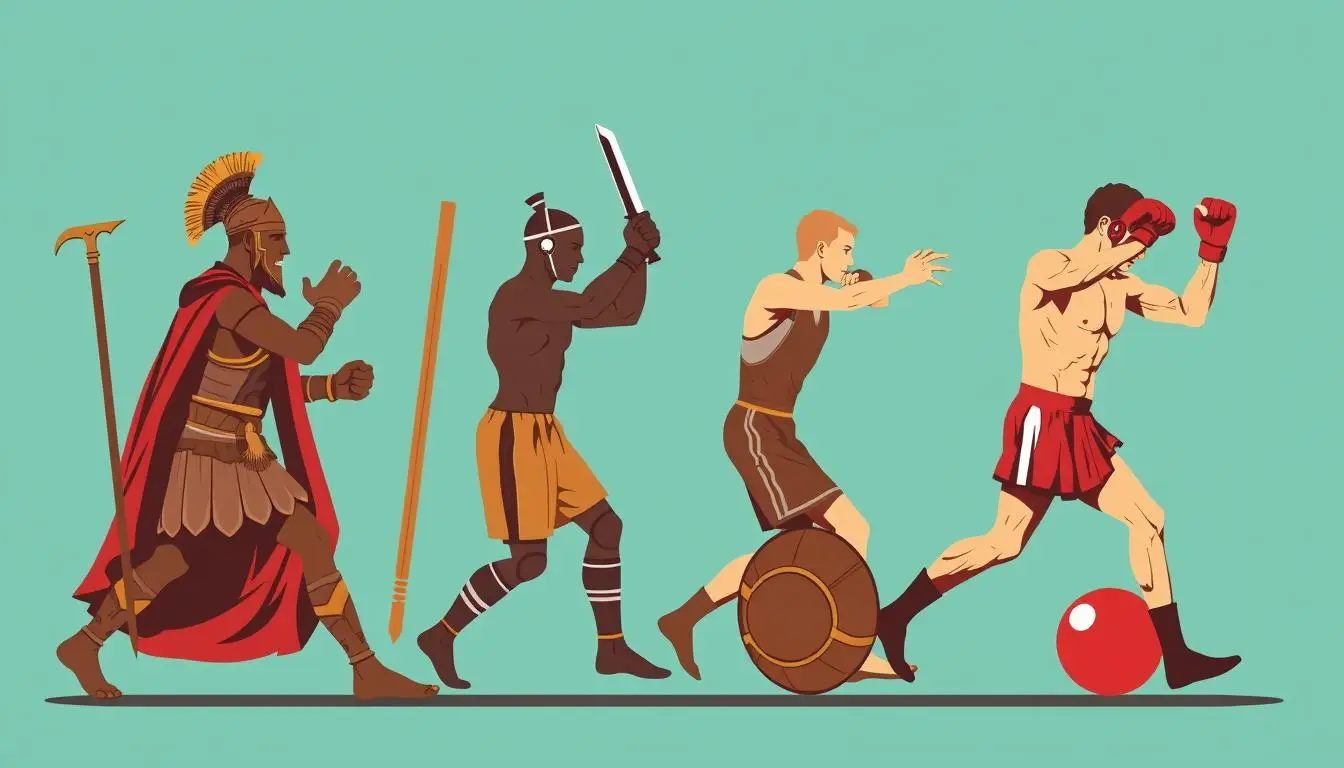
Combat sports have changed a lot over time. Traditional martial arts and modern fighting styles continue to influence one another. In ancient Greece, wrestling and boxing were prominent in the Olympics, demonstrating strength and honor. In ancient Rome, gladiators fought in public spectacles, showcasing the glory and harshness of the Roman Empire 20. Knights in medieval Europe loved jousting, a sport that showed their bravery and manners.
The 20th century saw significant changes, with boxing becoming a major professional sport, thanks to stars like Muhammad Ali. Professional wrestling leagues popularized the sport, moving it from a sideshow to the main entertainment. The late 20th century saw the emergence of mixed martial arts (MMA), transforming combat sports by incorporating multiple fighting styles.
Combat sports have helped address racial and social issues, such as during the civil rights movement. They’ve also inspired people to train rigorously for health and fitness, thereby changing fitness trends. These sports bring people together, with athletes representing their countries worldwide.
The growth of sports betting podcasts demonstrates that sports betting has become more complex and engaging. Women are now entering combat sports, breaking barriers, and diversifying these sports.
| Evolution of Combat Sports | Key Milestones |
|---|---|
| Ancient Greece and Rome | Wrestling and boxing in the OlympicsGladiatorial combat as a grand spectacle |
| Medieval Europe | Jousting as a symbol of chivalry and courtly manners |
| 20th Century | Boxing as a major professional sportEstablishment of professional wrestling leagues
Inception of mixed martial arts (MMA) |
| Societal Impacts | Addressing racial and social issuesInspiring rigorous training for personal health and well-being
Fostering national pride and unity Rise of women in combat sports |
Combat Sports: Techniques, Training, and Traditions
21 UFC 1, held in November 1993 in Denver, Colorado, marked the start of modern MMA. Asian Buttan martial arts have a long history, with texts such as Sun Tzu’s The Art of War, dated to 350 BC. Ancient Greece also featured boxing and wrestling at the Olympic Games.
Mixed martial arts originated in the 18th and 19th centuries, when hand-to-hand combat was codified as a sport. Greco-Roman wrestling became an Olympic event, and boxing got new rules in 1867. Disciplines such as Karate, Kendo, Judo, and Jiu-Jitsu originated in Japan.
The 20th century saw Asian martial arts become popular in the West through movies. This led to new disciplines like Muay Thai in the ’20s and Taekwondo in the ’50s. Judo became an Olympic sport in the ’60s, and American kickboxing started in the ’70s. The Karate World Championships also became more common.
MMA started as a mix of different martial arts in the UFC. Fighters began training in various disciplines to refine their skills, thereby developing a distinctive style. Traditional martial arts such as Karate and Boxing remain popular, offering self-defense and recreational benefits.
MMA competitions allow fighters to test and improve their skills, attracting individuals interested in fitness, self-defense, and new hobbies. Non-contact versions of combat sports, like boxercise and MMA drills, are also popular for fitness.
Combat sports are always changing, with new styles coming up and old ones adapting. Karate will be in the Olympics for the first time in 2020. The popularity of these sports keeps growing, with new gear, better media coverage, and many disciplines to choose from for fitness, sports, and watching.
Conclusion
The world of combat sports is full of rich traditions and new techniques. It’s a place where people can grow physically, mentally, and spiritually. From ancient martial arts to modern fighting systems, such as Tang Soo Do, there’s something for everyone.
Some like the cultural depth of traditional martial arts, while others prefer the practicality of mixed martial arts. Either way, learning these disciplines can change your life. They teach you to be ready and disciplined and help you grow in areas such as responsibility and confidence.
Combat sports are evolving, offering many opportunities to preserve traditions, build community, and push people to new heights. This world is a journey that can make you more aware of yourself, more resilient, and more deeply appreciate the art of Defendu combat.
Combat Sports: Techniques, Training, and Traditions: FAQ
What are the differences between traditional and modern martial arts?
Traditional martial arts focus on cultural roots, discipline, and personal growth. Modern styles, by contrast, emphasize practical self-defense and adaptability.
How do modern combat sports differ from traditional martial arts?
Modern combat sports such as Krav Maga and Mixed Martial Arts emphasize real-world self-defense. They have a flexible program that includes techniques from various disciplines.
What is the difference between striking arts and grappling arts in combat sports?
Striking arts, such as Kickboxing and Karate, work on striking skills, fitness, and self-defense. Grappling arts, such as Judo and Brazilian Jiu-Jitsu, emphasize throws, grappling, and submission holds.
How does Krav Maga differ from other martial arts styles?
Krav Maga is an Israeli self-defense system. It focuses on real-world threats and teaches quick ways to mitigate them. It also emphasizes being aware of your surroundings and making fast decisions.
What is the role of tradition in the context of martial arts?
Tradition in martial arts refers to preserving the culture and distinctive aspects of a style’s history. It’s not just about sticking to old ways. Modern styles also have their own customs and stories that are passed down.
Source Links
More Articles
Combat sport – https://en.wikipedia.org/wiki/Combat_sport
Traditional Martial Arts vs. Combat Sports vs. Self-Defense Training – https://medium.com/@teaminitialmile/traditional-martial-arts-vs-combat-sports-vs-self-defense-training-c4b39e3e9b65
Traditional vs. Modern Martial Arts: What’s the Difference? – https://globalmartialarts.university/2024/06/19/traditional-vs-modern-martial-arts-whats-the-difference/
Traditional vs. Modern Martial Arts – https://themartialpoet.home.blog/2020/12/09/traditional-vs-modern-martial-arts/
Examining The Use Of Traditional Martial Arts In Modern MMA – https://evolve-mma.com/blog/examining-the-use-of-traditional-martial-arts-in-modern-mma/
Mixed martial arts (MMA) | UFC, Fighting Styles, Boxing, Techniques, & Facts – https://www.britannica.com/sports/mixed-martial-arts
Mixed martial arts – https://en.wikipedia.org/wiki/Mixed_martial_arts
Traditional Martial Arts – What is ‘Tradition’? – Martial Journal – https://www.martialjournal.com/traditional-martial-arts-tradition/
What are ‘traditional’ martial arts? – https://thetaichinotebook.com/2024/02/19/what-are-traditional-martial-arts/
16 Different Types of Martial Arts Styles | Gymdesk – https://gymdesk.com/blog/different-types-of-martial-arts/
Striking and Grappling Martial Arts: The Difference and Importance – https://www.elitesports.com/blogs/news/striking-and-grappling-martial-arts-the-difference-and-importance?srsltid=AfmBOooByeEB08NTeIYPXnQ01LlpQlNVUmk744RHR_t9KCBkxT5VTYfb
The Art of Striking: Exploring the Dynamic World of Martial Arts – https://surgekickboxing.com/blog/view/the-art-of-striking-exploring-the-dynamic-world-of-martial-arts
Grappling – https://en.wikipedia.org/wiki/Grappling
Types of Grappling Martial Arts – https://www.jiujitsubrotherhood.com/blogs/blog/grappling-martial-arts?srsltid=AfmBOoqLt1u_5jP0eB7P3eDdIDb3YcdafoJt69_wzJQKb0fZgf8ZNEtq
Weapons and Fighting: The Most Popular Armed Combat Sports – Martial Tribes – https://www.martialtribes.com/weapons-and-fighting-the-most-popular-armed-combat-sports/
Are Combat Sports like Jiu-Jitsu or Boxing Good for Self-Defense? — Crazy 88 MIXED MARTIAL ARTS: 7 Day Free Trial – https://www.crazy88mma.com/are-combat-sports-like-jiu-jitsu-or-boxing-good-for-self-defense/
The 7 Best Martial Arts for Self Defense – https://www.onefc.com/lifestyle/best-martial-arts-for-self-defense/
The Evolution and Impact of Combat Sports: From Ancient Arenas to Modern Mat – https://combatpress.com/2024/01/the-evolution-and-impact-of-combat-sports-from-ancient-arenas-to-modern-mat/
Guest Post: The Evolution of Combat Sports – Physical Culture Study – https://physicalculturestudy.com/2019/02/21/guest-post-the-evolution-of-combat-sports/
Why are combat sports the most effective way to train for self defense? – https://fitnessfightfactoryhaslet.com/blog/139872/Why-are-combat-sports-the-most-effective-way-to-train-for-self-defense-
The Impact of Combat Sports and Training on a Person’s Character – https://combatpress.com/2022/12/the-impact-of-combat-sports-and-training-on-a-persons-character/
Frontiers | Considerations When Assessing Endurance in Combat Sport Athletes – https://www.frontiersin.org/journals/physiology/articles/10.3389/fphys.2019.00205/full
Combat Sports History Combat Sports Techniques Combat Training Fighting techniques Martial Arts Mixed Martial Arts (MMA) Self-defense Sparring Drills Traditional martial arts
Last modified: